Gun Collectors Dream Auction #85 Weapons of War July 18th 10AM CST
Lot 29:
Sold for: $110
Description
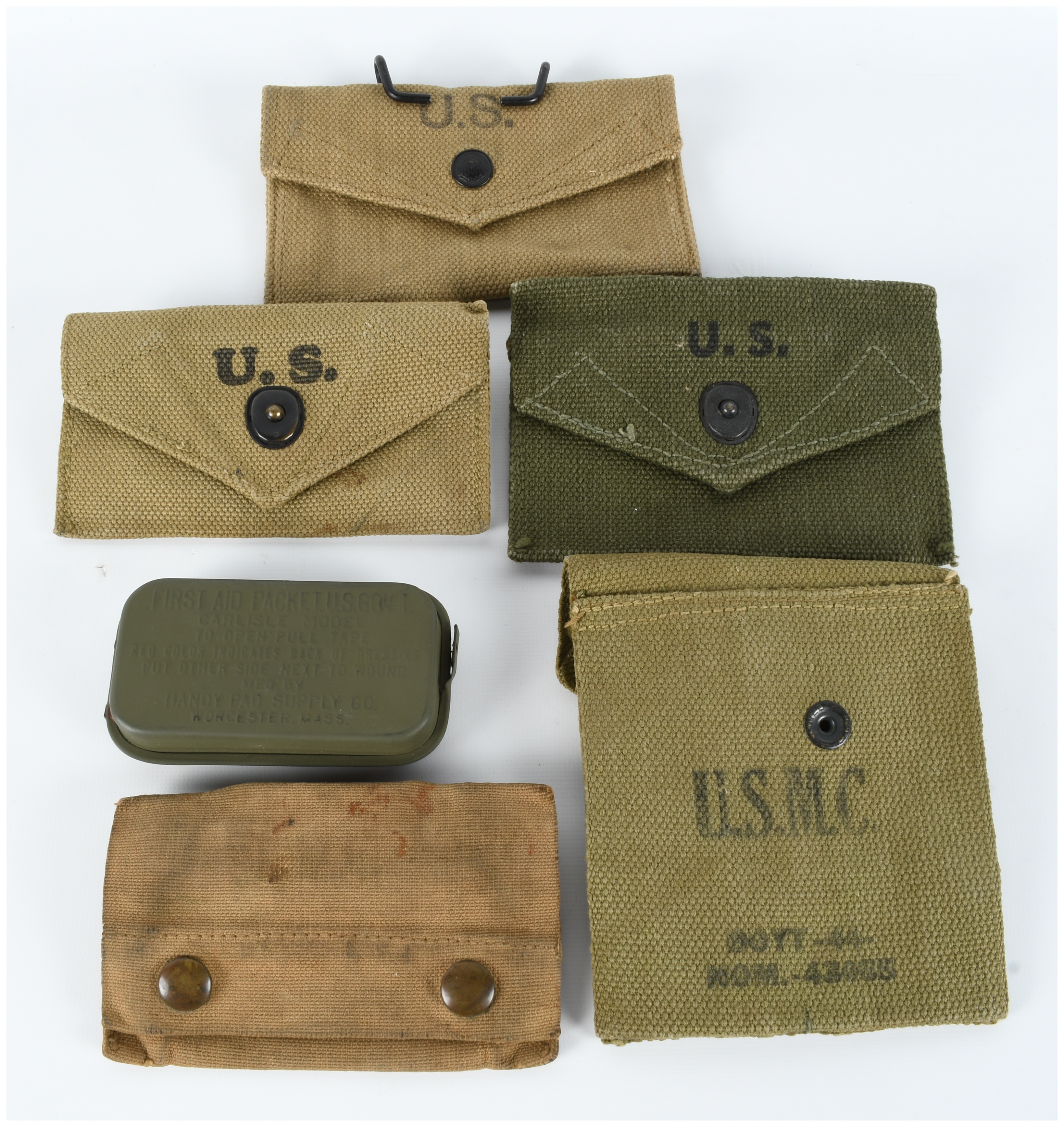
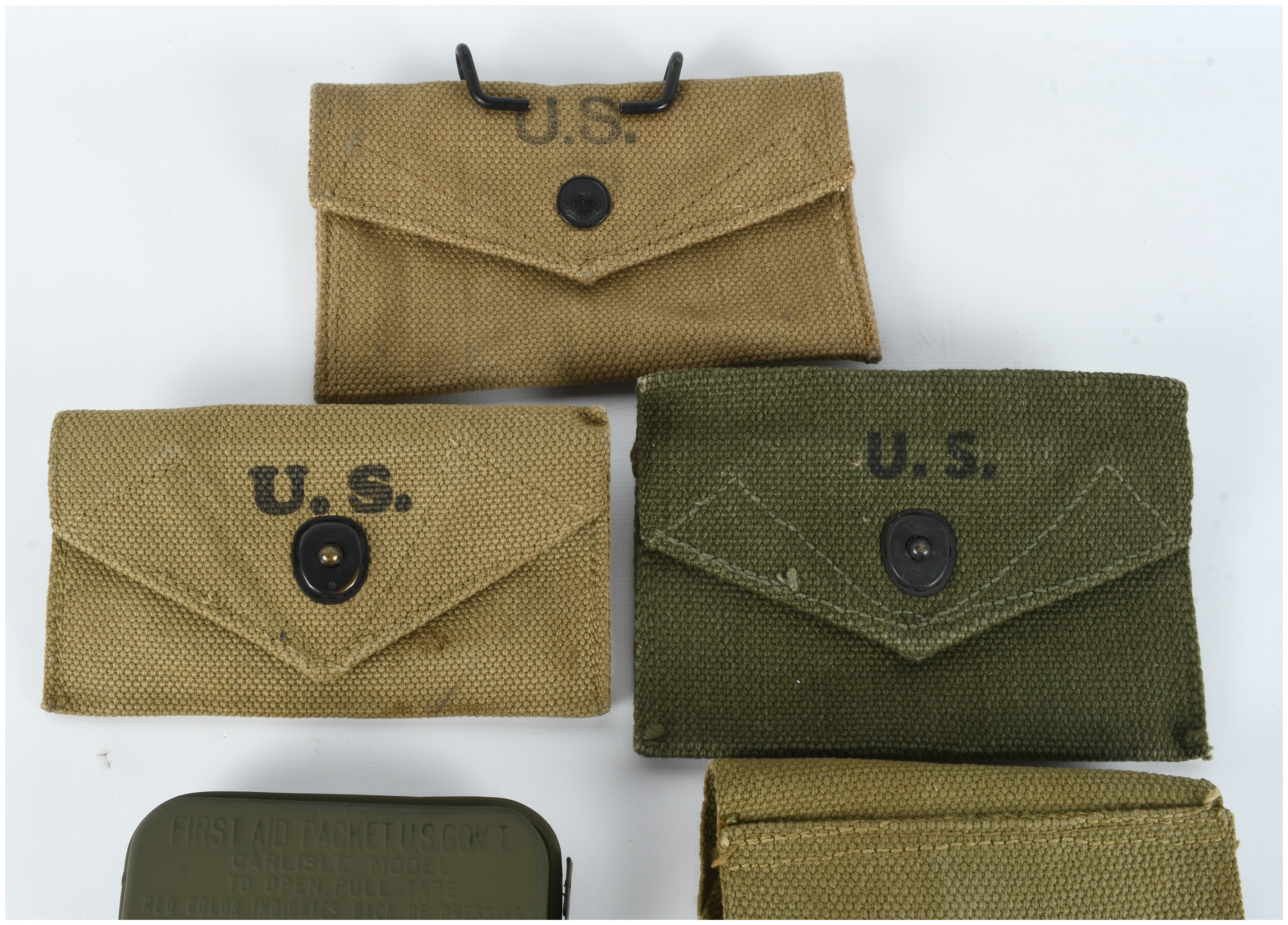
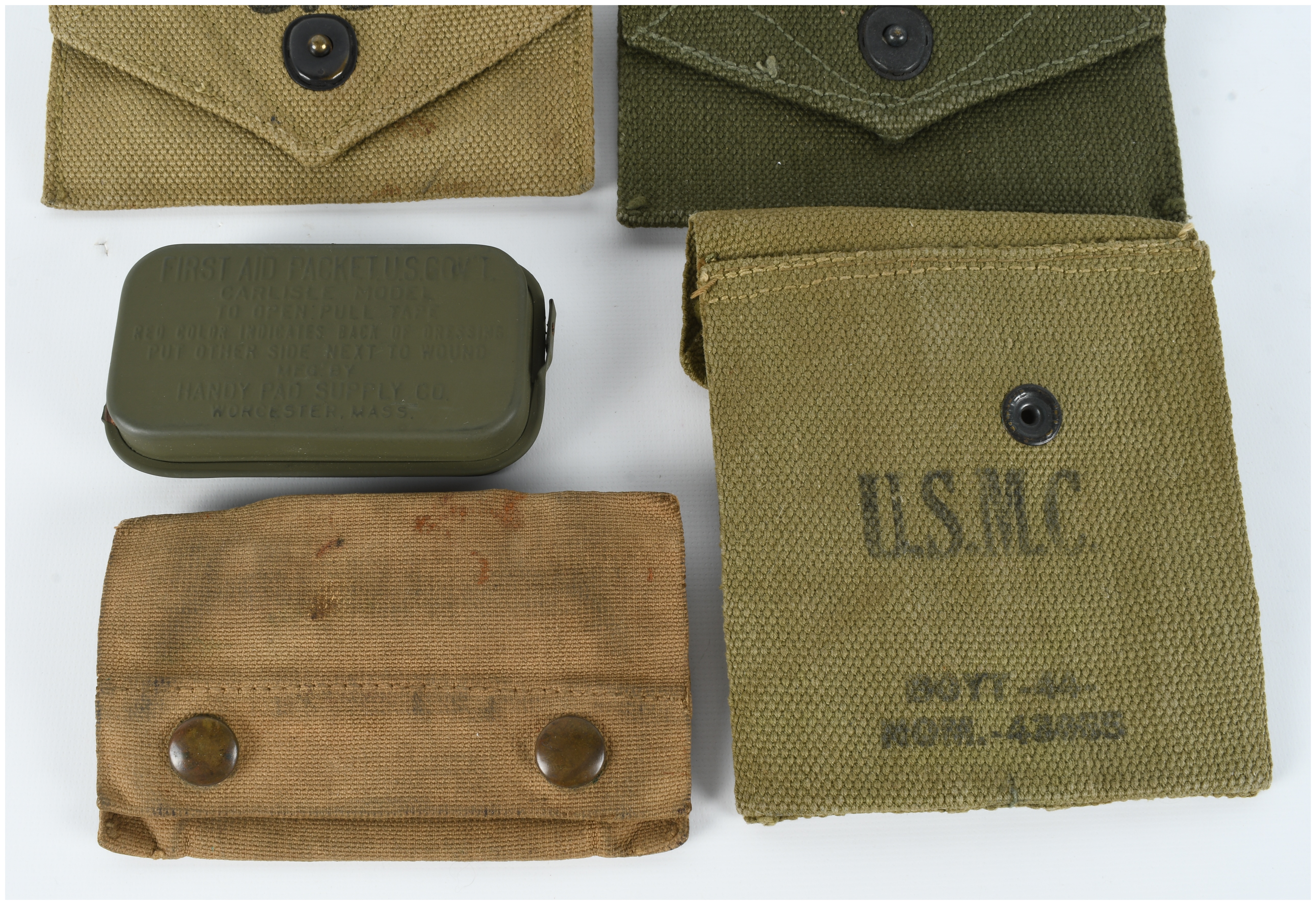
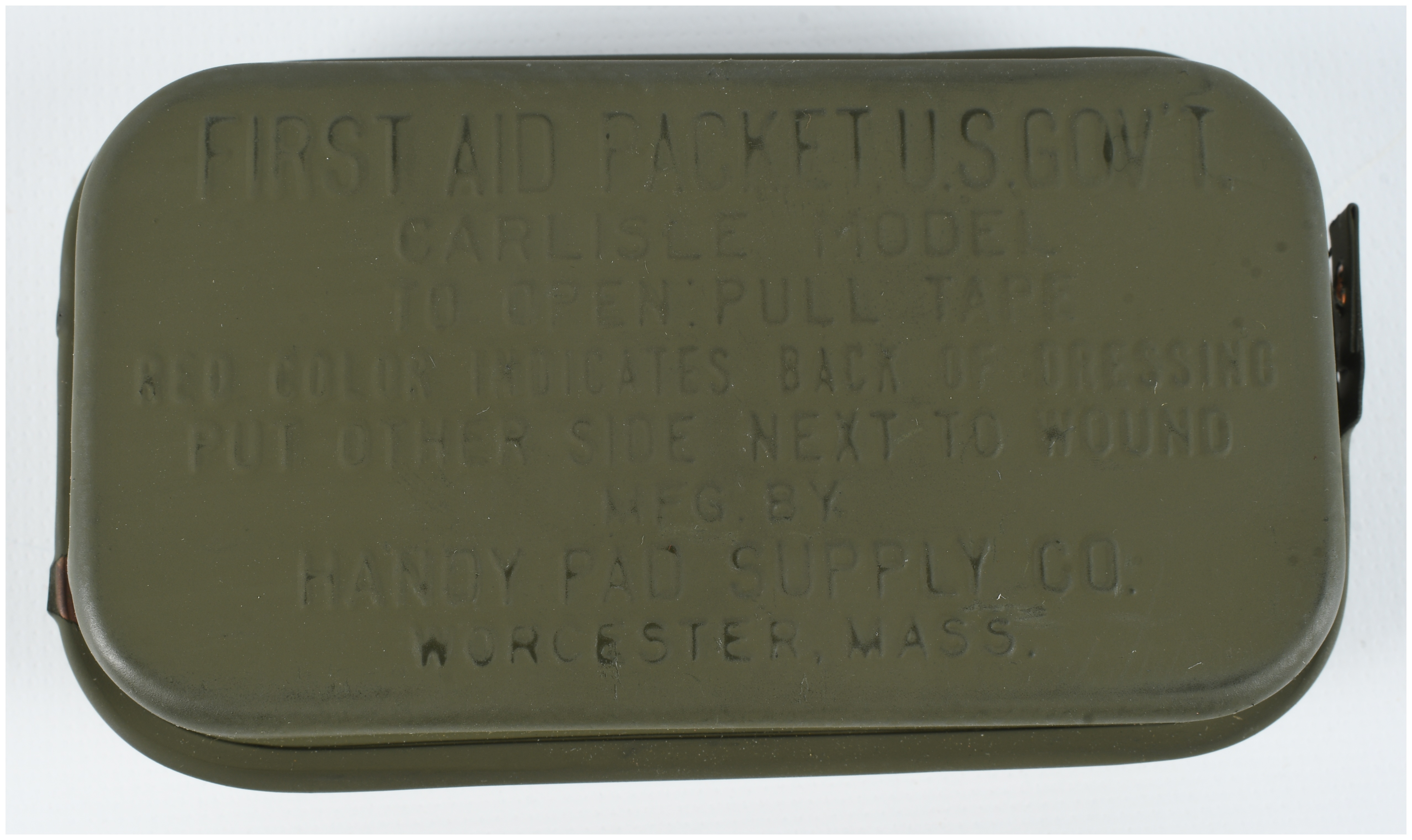
This group consists of several pieces of United States military field medical equipment primarily dating to the World War II era. The collection includes four first aid pouches of different patterns, one small accessory pouch, and one metal first aid packet container. Three of the pouches are standard US Army issue, including examples in early-war khaki OD #3 canvas and mid-to-late war olive drab OD #7 canvas. These pouches feature a mix of lift-the-dot and snap fasteners and are stamped U.S. on the front flaps. One larger khaki canvas pouch is a US Marine Corps model, clearly stamped U.S.M.C. on the front flap with additional manufacturer markings reading BOYT – 44 and contract number NOM – 43058, indicating production by the Boyt Harness Company in 1944. The metal item is a Carlisle Model First Aid Packet tin with an olive drab finish. The tin is embossed with the following text: FIRST AID PACKET U.S. GOV’T. CARLISLE MODEL TO OPEN: PULL TAPE RED COLOR INDICATES BACK OF DRESSING PUT OTHER SIDE NEXT TO WOUND MFG BY HANDY PAD SUPPLY CO. WORCESTER, MASS. Also included is a small brown fabric accessory pouch featuring two metal snap closures. Construction throughout the group utilizes heavy cotton duck canvas and metal hardware including standard double-wire belt hooks.
Condition report:
The items are in good vintage condition, exhibiting characteristics of authentic field use and age. The canvas components show varying degrees of fading, light surface staining, and minor fraying at the edges and seams. Metal hardware, including snap fasteners and belt hooks, shows typical oxidation and some loss of the original blackened or painted finish. The Carlisle tin retains a majority of its original olive drab paint with minor scuffing and small spots of surface oxidation; all embossed lettering remains clearly legible.
Share this lot: