Gun Collectors Dream Auction #85 Weapons of War July 18th 10AM CST
Lot 80:
Sold for: $160
Description
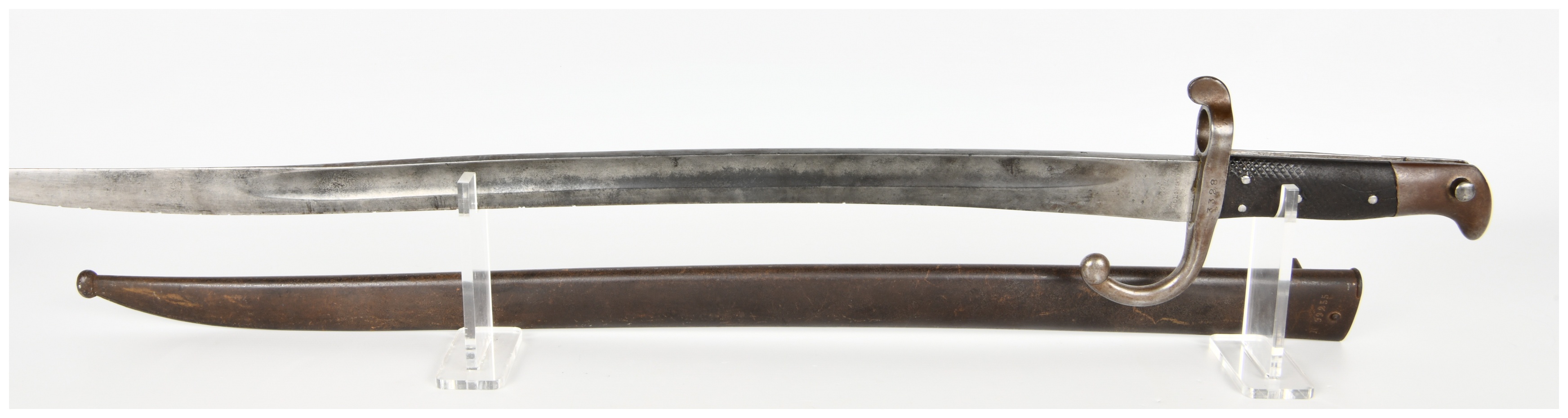
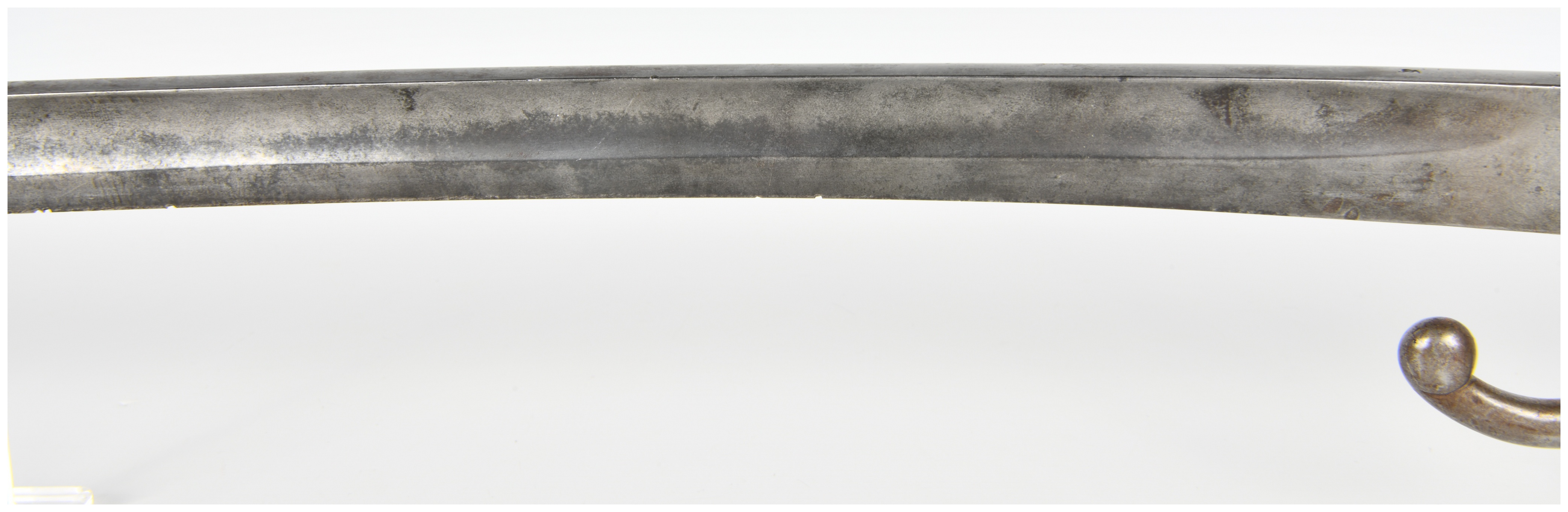
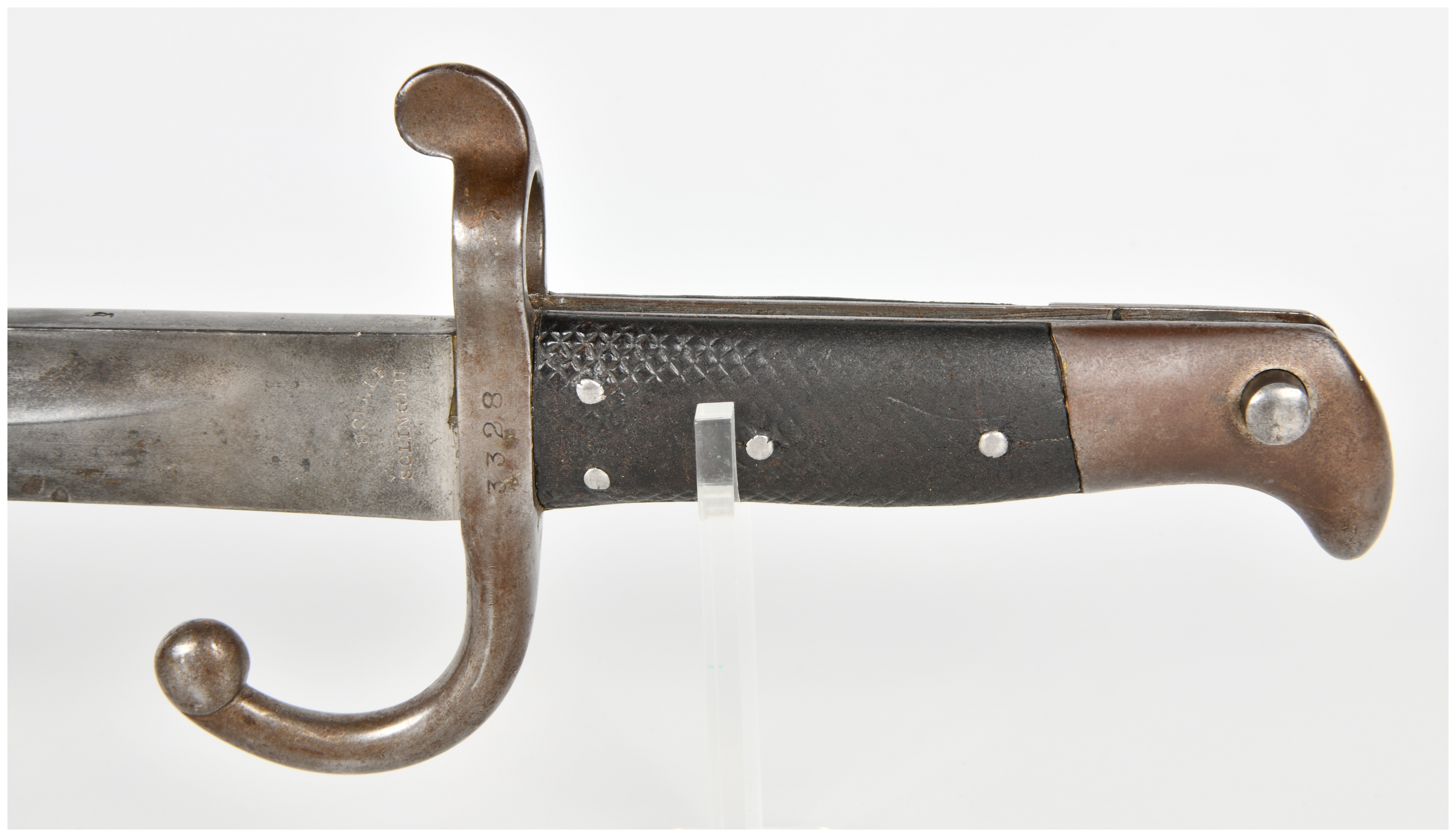
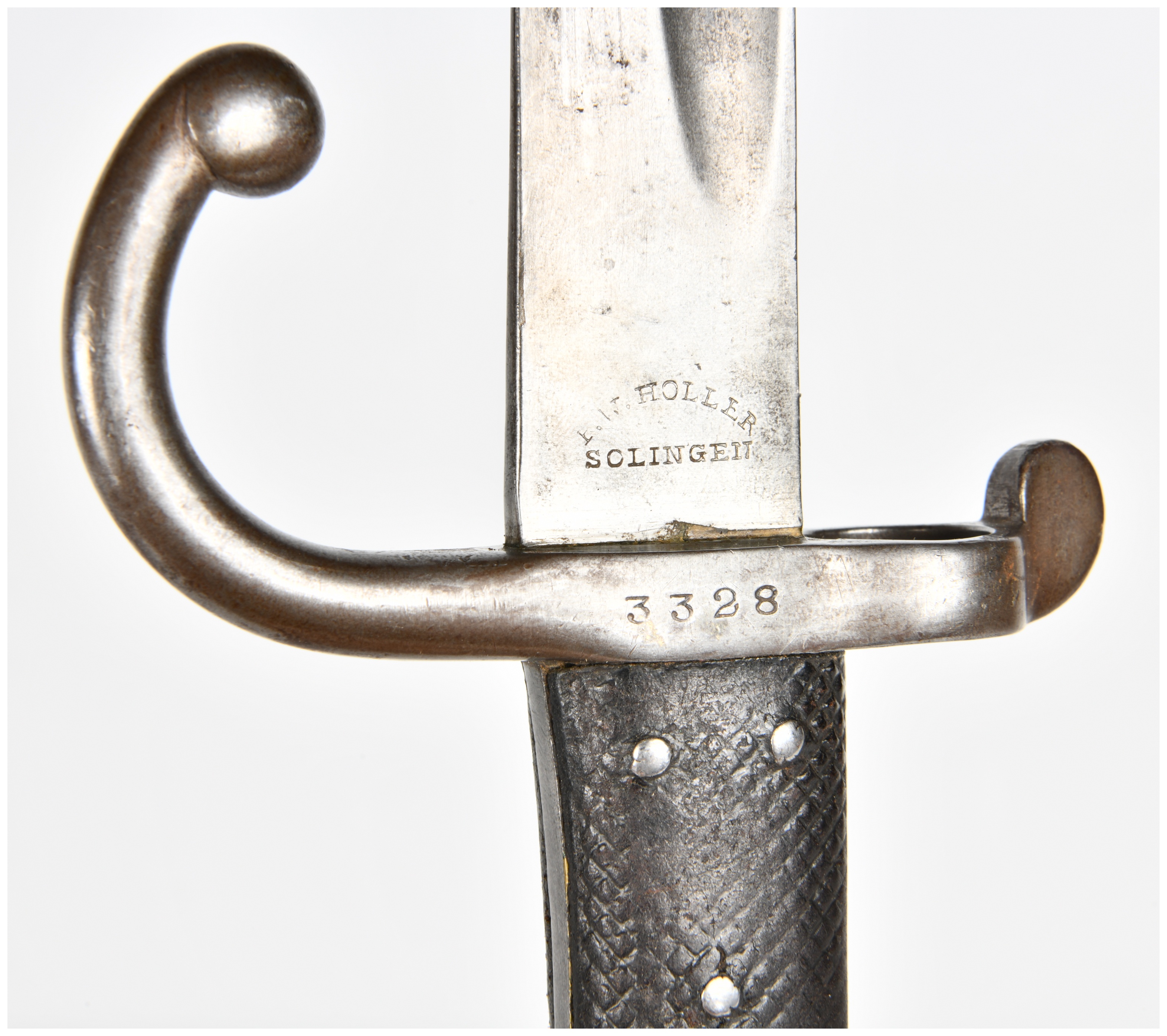
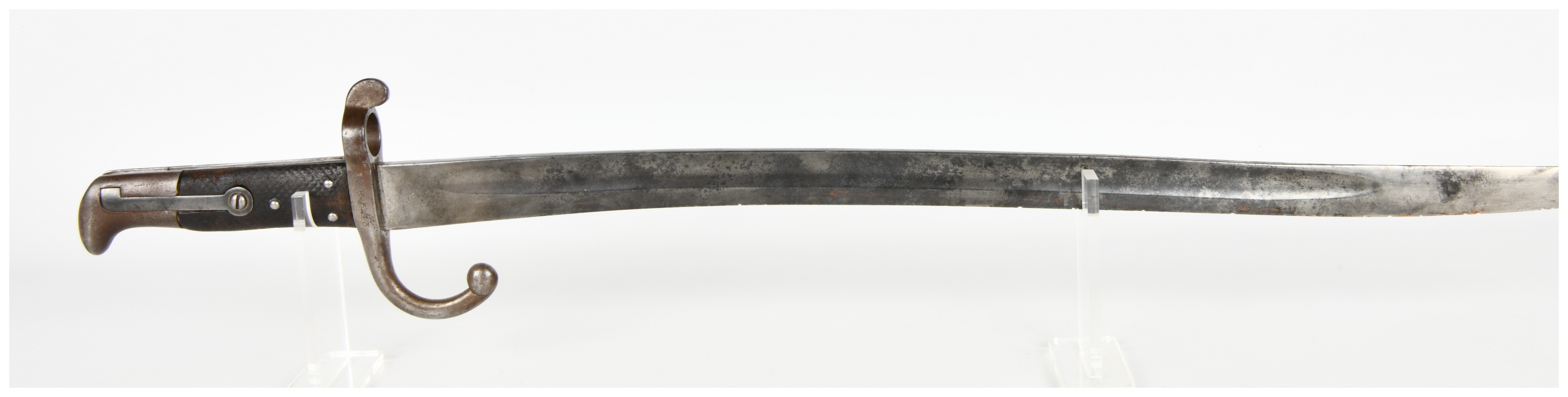
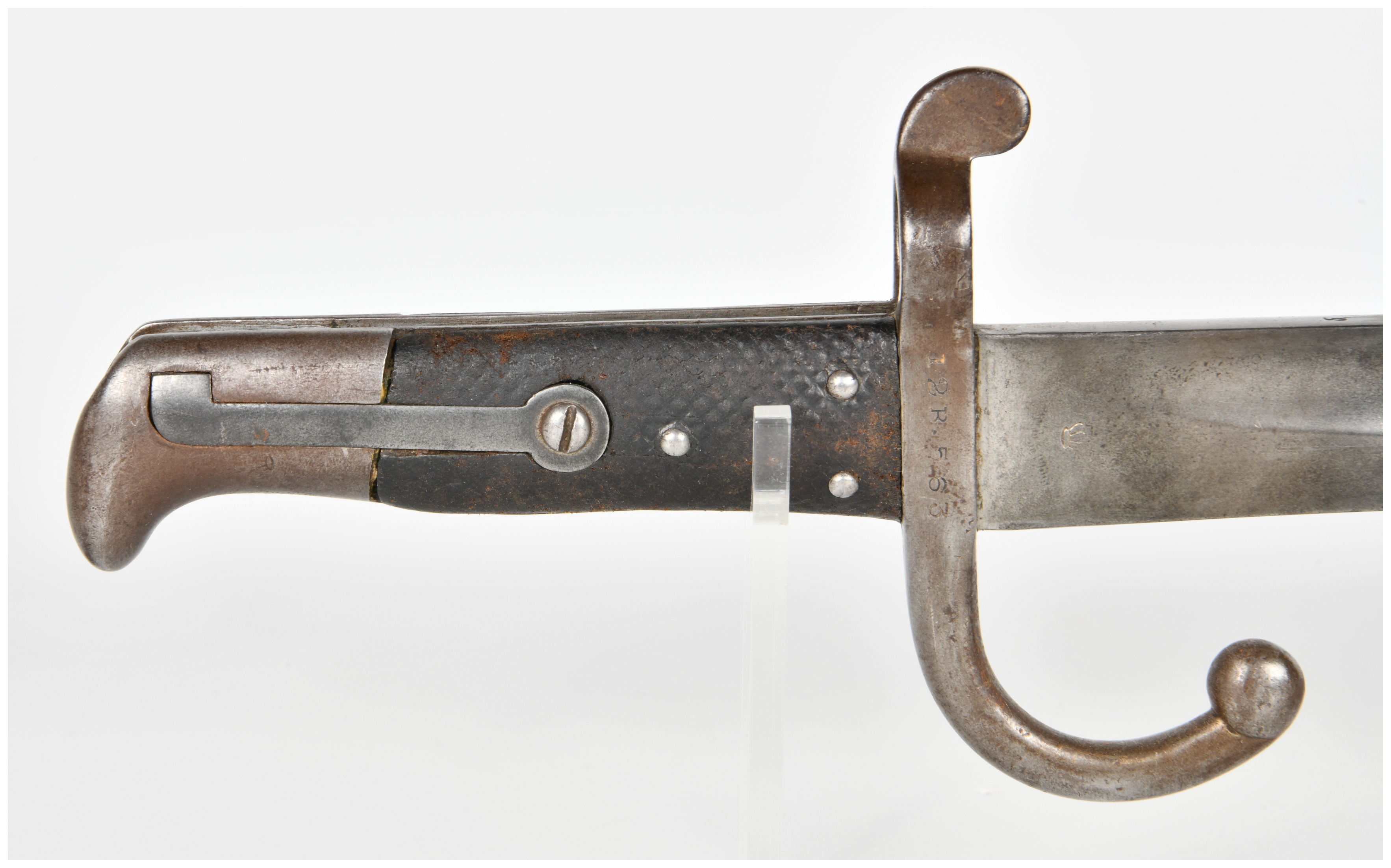
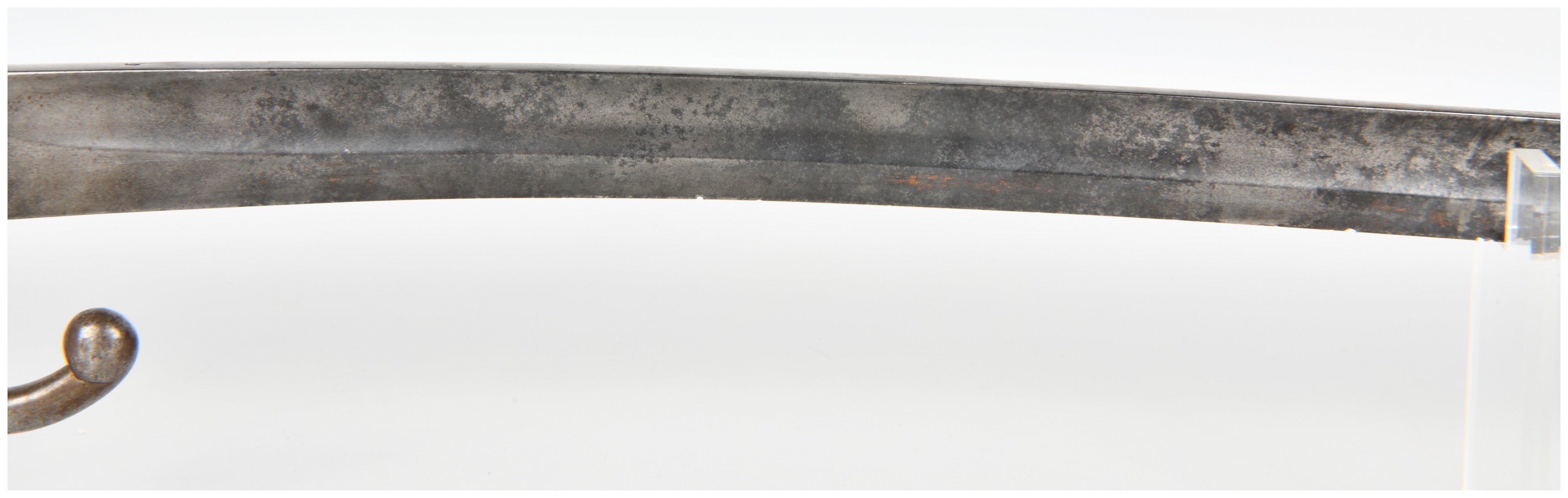
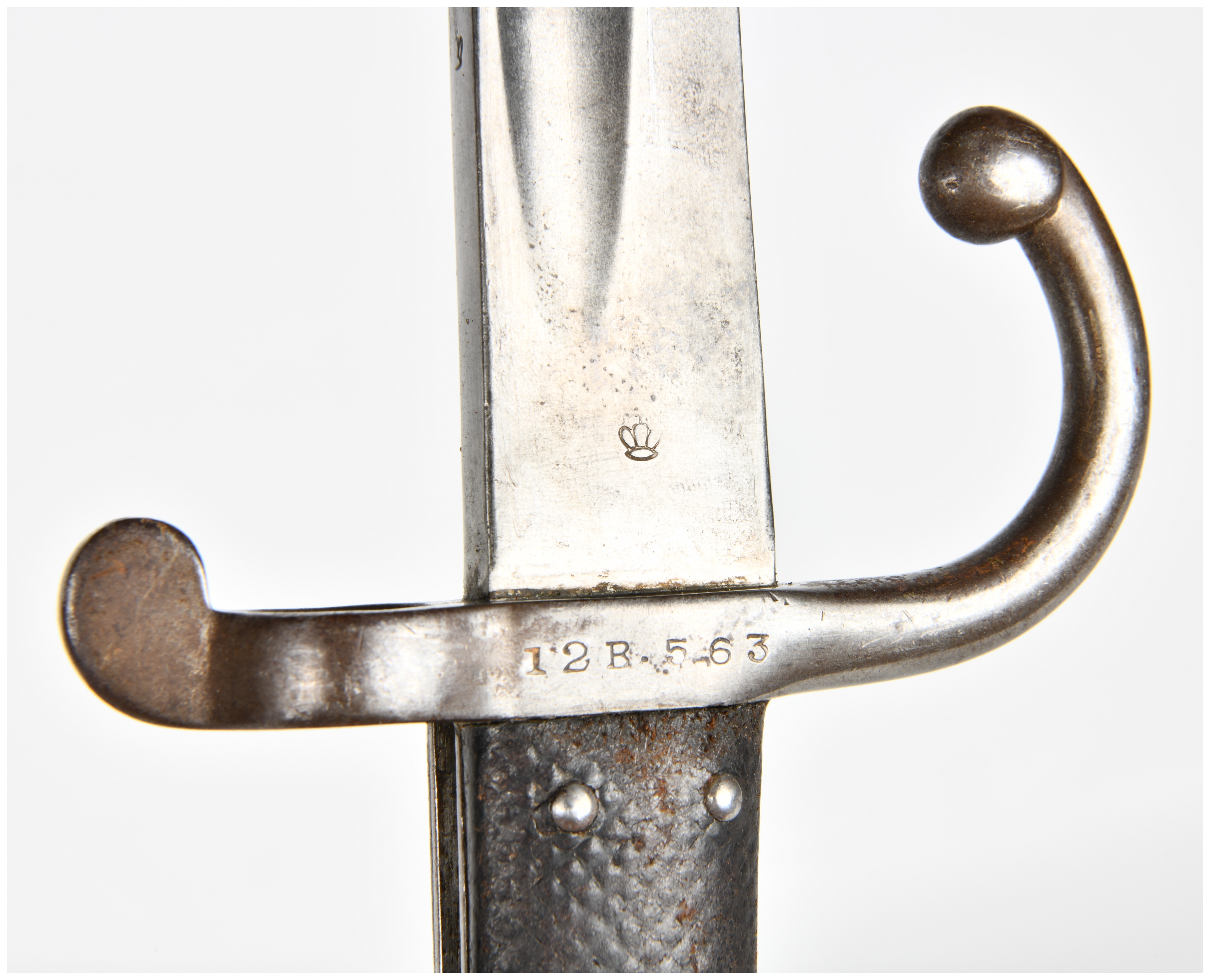
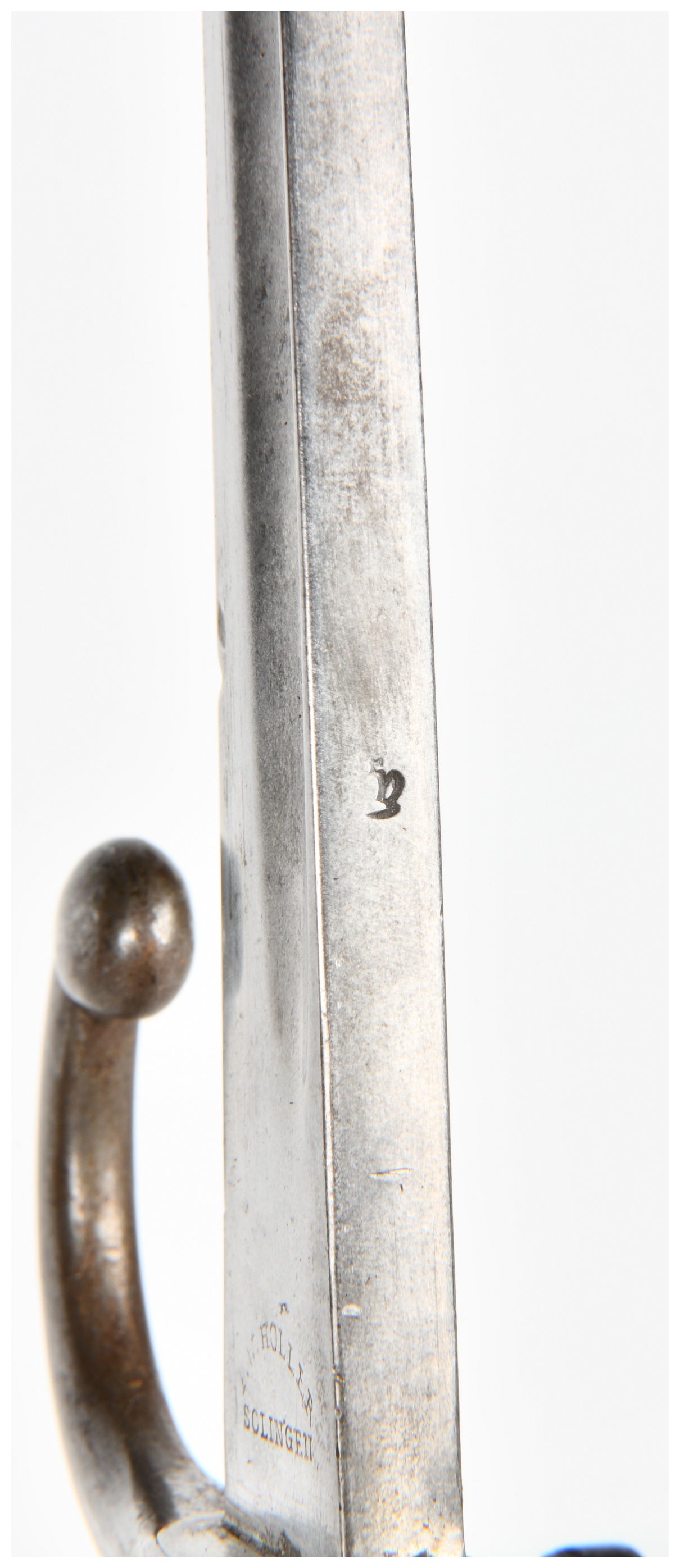
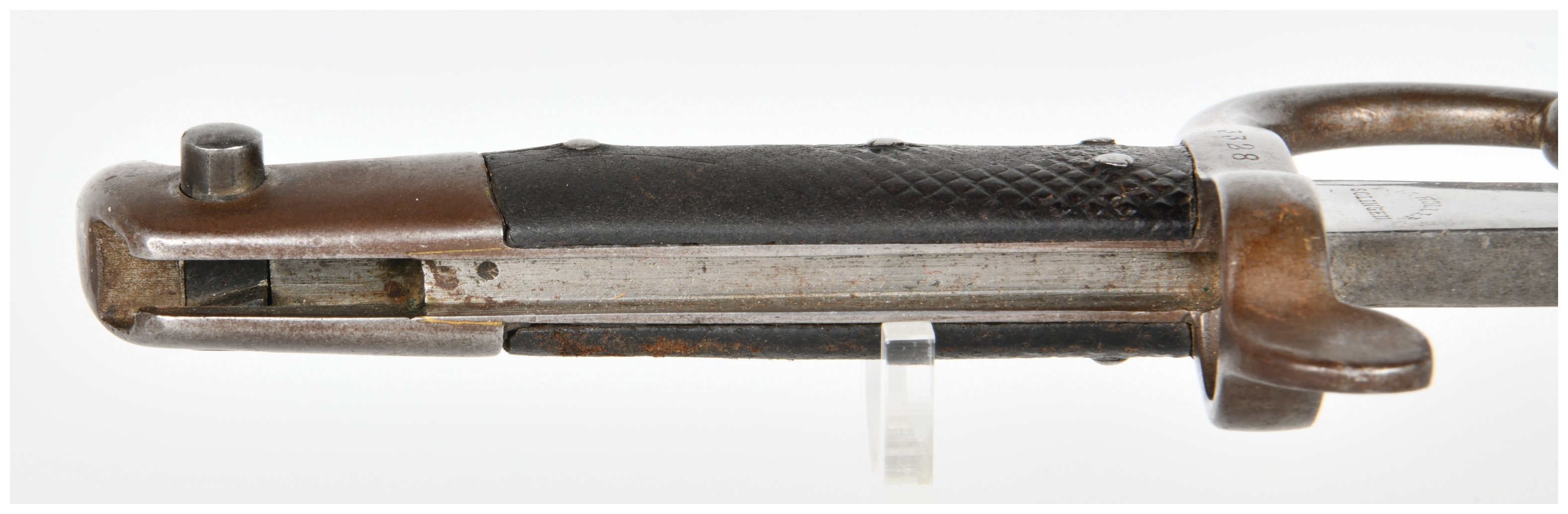
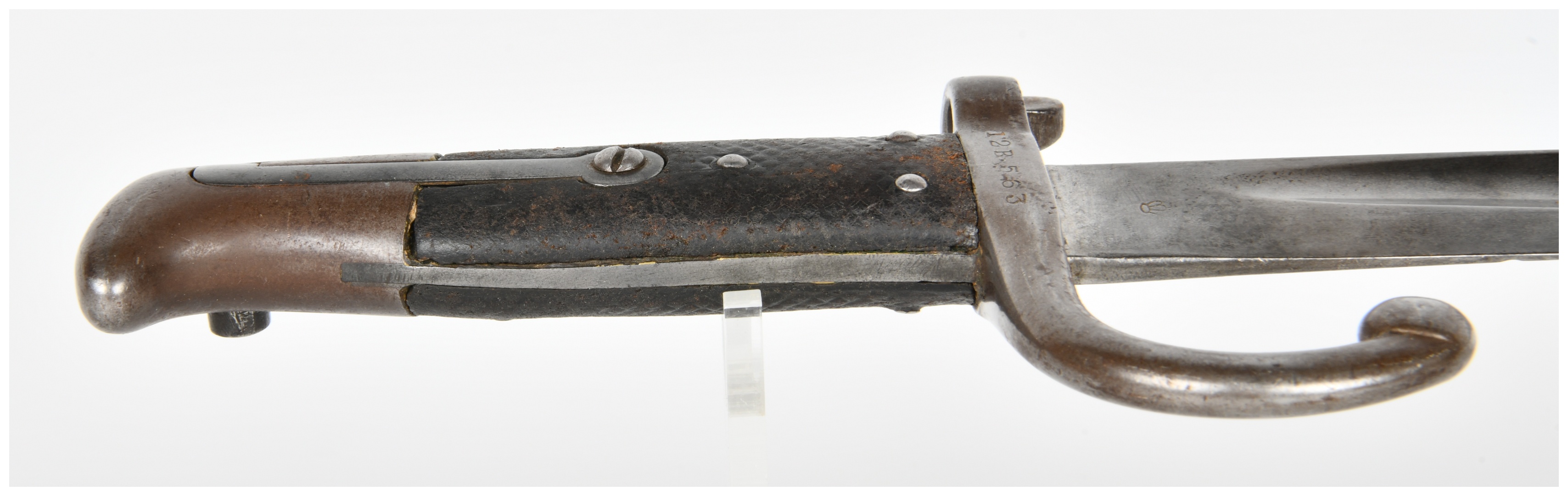
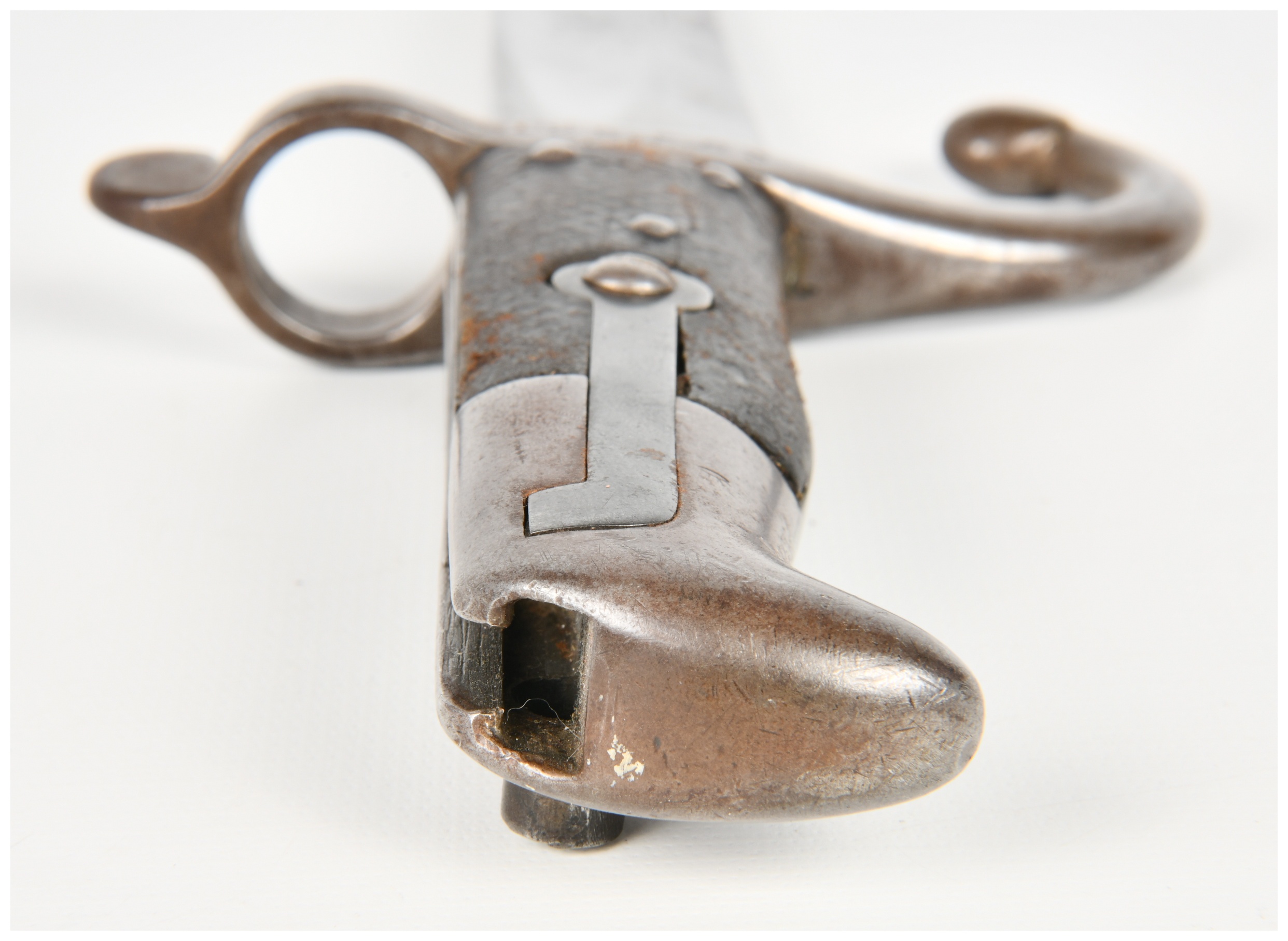
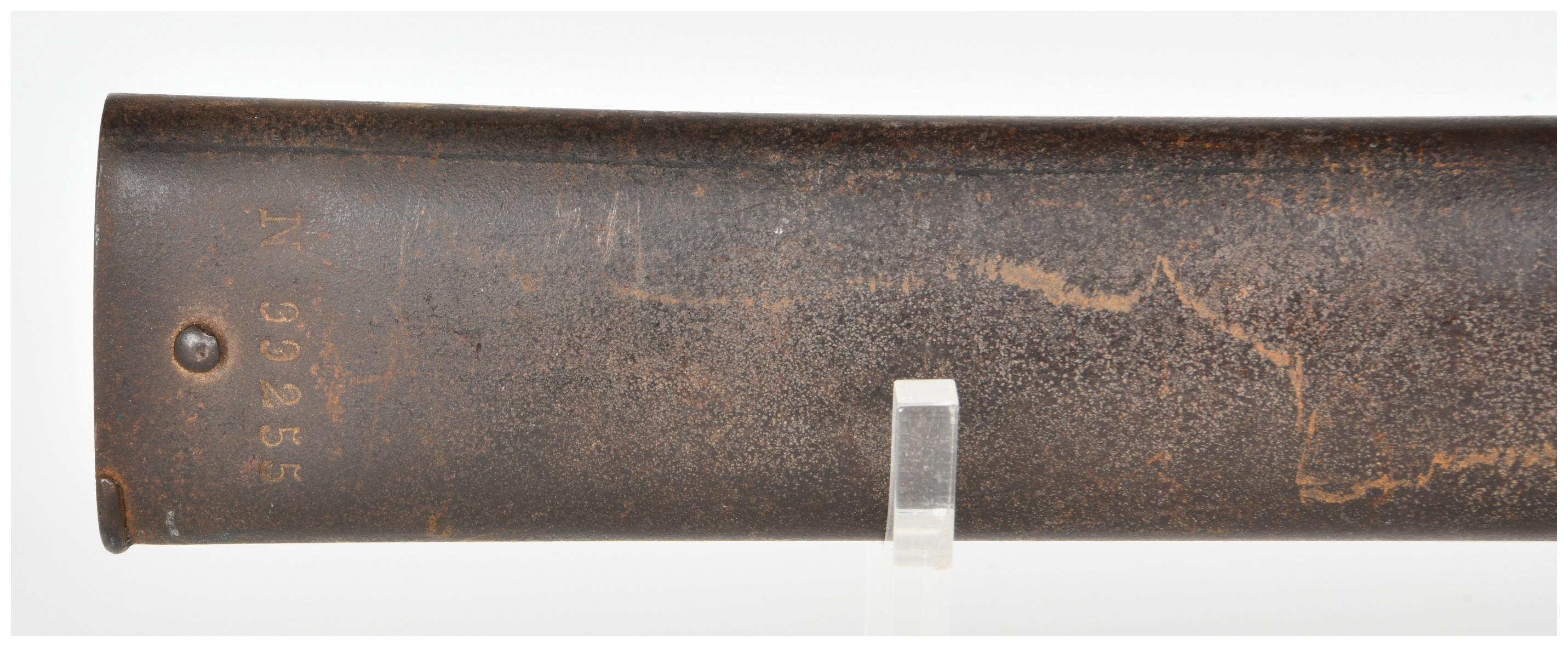
A Prussian Model 1860 Fusilier bayonet, designated as the Fusilier-Seitengewehr M/60, manufactured by the firm F.W. Holler of Solingen. This model was designed for use with the M1860 Dreyse needle fusilier rifle. The bayonet features a steel recurved Yataghan-style blade with a single wide fuller on each side. The hilt is constructed with a steel crossguard featuring a forward-swept quillon ending in a ball finial and an integrated muzzle ring. The grips are composed of black checkered pressed leather-composition material secured to the tang by five steel rivets. The steel pommel is beak-shaped and houses a leaf-spring-actuated press-button locking mechanism. The blade ricasso is stamped with the manufacturer mark F. W. HOLLER SOLINGEN. The blade spine bears a Prussian royal acceptance mark consisting of a crown over W above 63, indicating acceptance into service during the reign of King Wilhelm I in 1863. The front of the crossguard is stamped with the military unit mark 12.R.5.63, identifying service with the 12th (2nd Brandenburg) Infantry Regiment Prince Charles of Prussia, 5th Company, weapon number 63. The reverse of the crossguard is marked with serial number 3328. Small crowned gothic inspector marks are present on the blade flat and ricasso. Included is an all-steel scabbard with a ball finial at the tip and a mismatched serial number N 93255 located on the throat.
Blade Length: 21 inches
Total Length: 26.5 inches.
Condition report:
The blade displays a consistent dark gray patina with scattered surface oxidation and light peppering. The cutting edge exhibits several small nicks consistent with age and use. The steel hilt components have transitioned to a deep brown-gray patina. The black checkered grips remain largely intact but show observable surface wear, minor compression marks, and some drying cracks in the material. All five rivets remain secure. The steel scabbard retains a heavy dark brown patina with significant surface oxidation throughout; it remains structurally sound and free of major dents.
Share this lot: